Credit Note
A credit note is a financial document issued by a seller to a
buyer, serving as an official acknowledgment of a debt reduction or
reimbursement owed by the seller to the buyer. Unlike a debit note that
increases the buyer's liability, a credit note decreases it.Here are common scenarios where a credit note might be issued:
1. Returns or Overpayments : If a buyer returns goods to the seller or has overpaid, the seller issues a credit note to acknowledge the reduction in the buyer's liability or to refund the excess payment.
2. Price Adjustments : In cases where there's a price reduction or a discount granted after an invoice has been issued, a credit note is issued to reduce the amount owed by the buyer.
3. Faulty Goods or Services : If the goods or services provided by the seller are faulty, not as described, or incomplete, a credit note may be issued to compensate the buyer for the discrepancy.
4. Cancellation of Services : If there's a cancellation of services or an agreement termination, a credit note reflects the reduced amount the buyer owes to the seller.
In summary, a credit note functions as an official acknowledgment of a reduction in the buyer's liability to the seller, often issued to rectify overpayments, acknowledge returns, adjust pricing, or compensate for deficiencies in goods or services provided.
Credit Note Listing Page
This page displays a list of all credit Notes in the system.
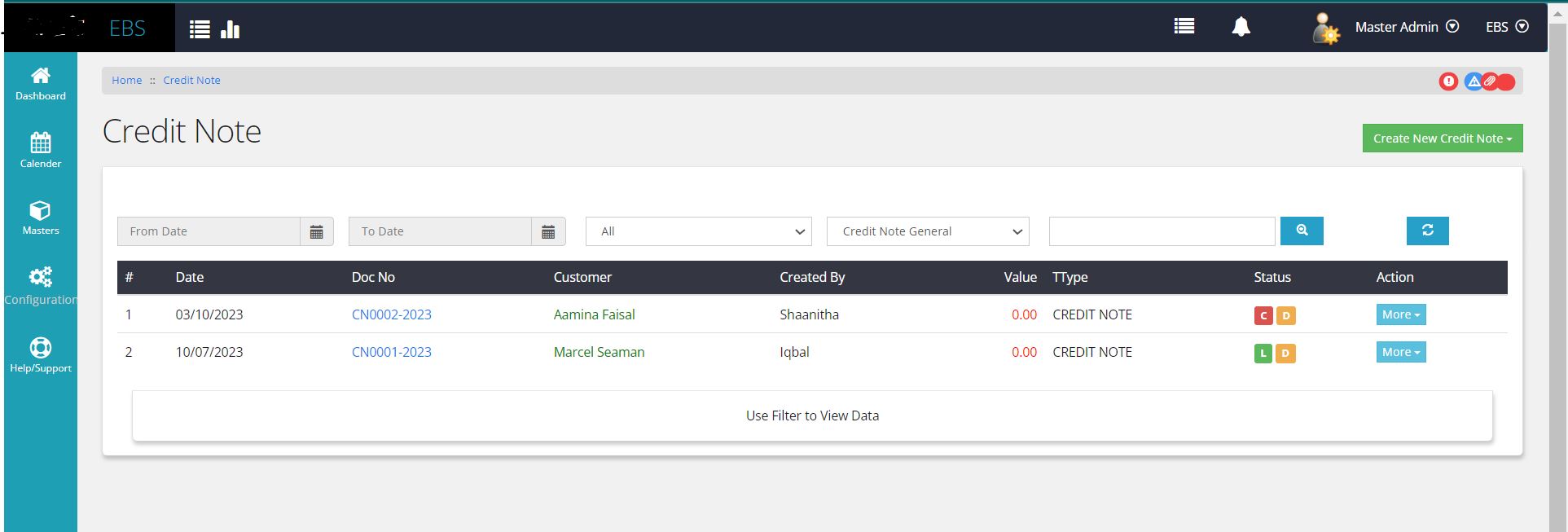
The Credit Note Listing page is equipped with a comprehensive set of filter options allowing users to refine their search. They can choose to filter by Date Range, selecting whether the Credit Note has been Posted or Not Posted, and categorize by the Type of credit Note. Upon setting the preferred criteria, users can click the 'Search' button to load the grid below with the corresponding data.
Additionally, a versatile search box is available, enabling users to search for specific details such as Customer Name, Date, Document Code, or any other relevant information within the listed credit Notes.
Credit Note Status
The Credit Note document status is represented by two main states: 'Cancelled' and 'Live', denoted by 'C' and 'L', respectively. Additionally, there's an another status to indicate the current position within the document lifecycle. This status includes 'Draft' marked as 'D', 'Save' as 'S', and 'Posted' as 'P'. These shorthand codes - 'D', 'S', and 'P' - signify the current stage of the document, assisting users in identifying the document's status at a glance.
Action button
The action button on the credit Note listing page presents users with two distinct options: 'Details' and 'Print'. Clicking the 'Details' link directs users to an inner page dedicated to the specific document, providing a comprehensive view of its contents and details.
Credit Note Detail View
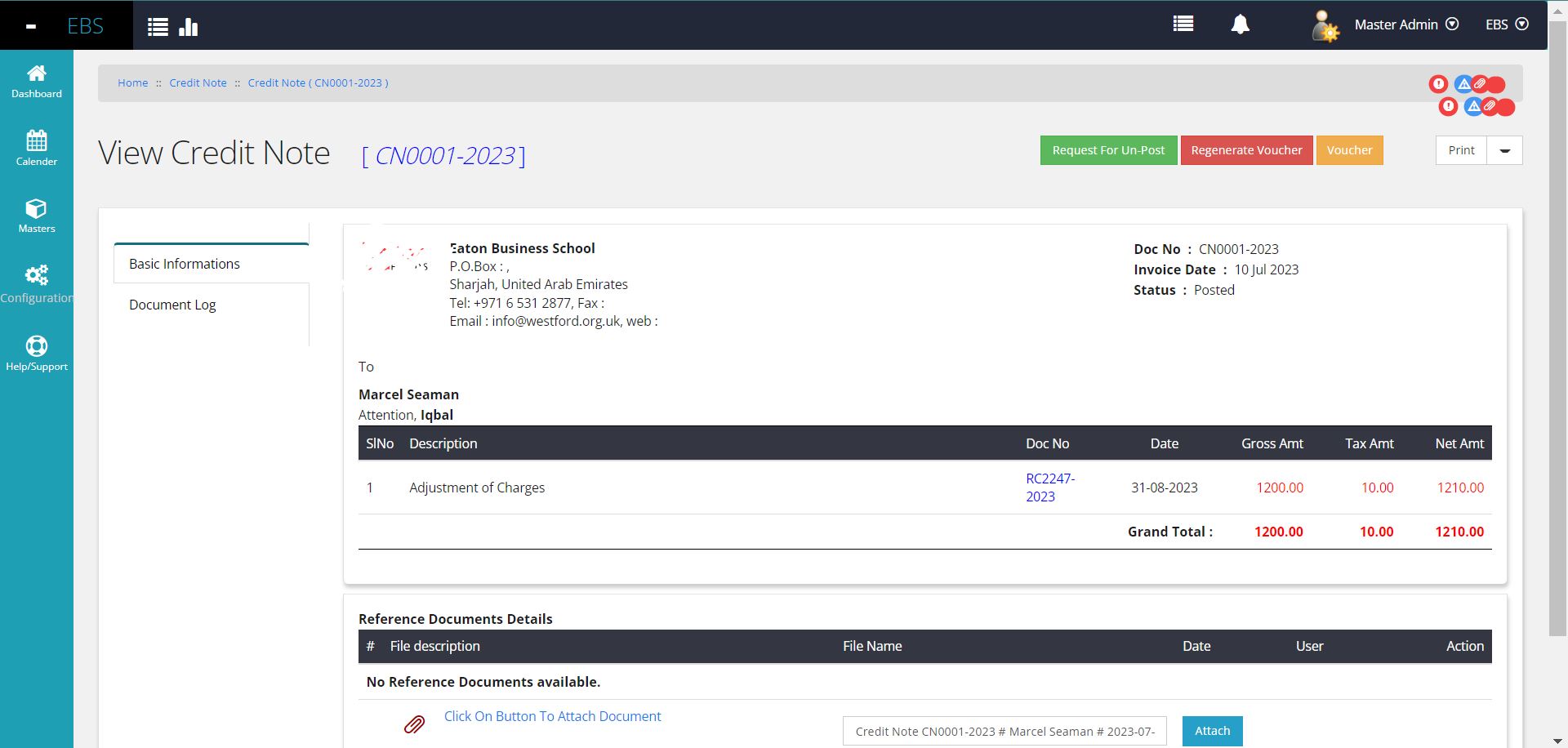
On this detailed view, users can access all recorded information associated with this credit note. Additionally, there is a provision to upload any scanned documents, located below the details section.
At the top right corner, buttons are provided for specific actions. The 'View Voucher Details' button allows accounting executives to review the ledgers affected by posting this document. Another button labeled 'Request to Unpost' enables users to request an unpost action in scenarios where it's necessary. The authorized administrator can then unpost the document, provided no linked documents are booked or any financial allocations have been made.
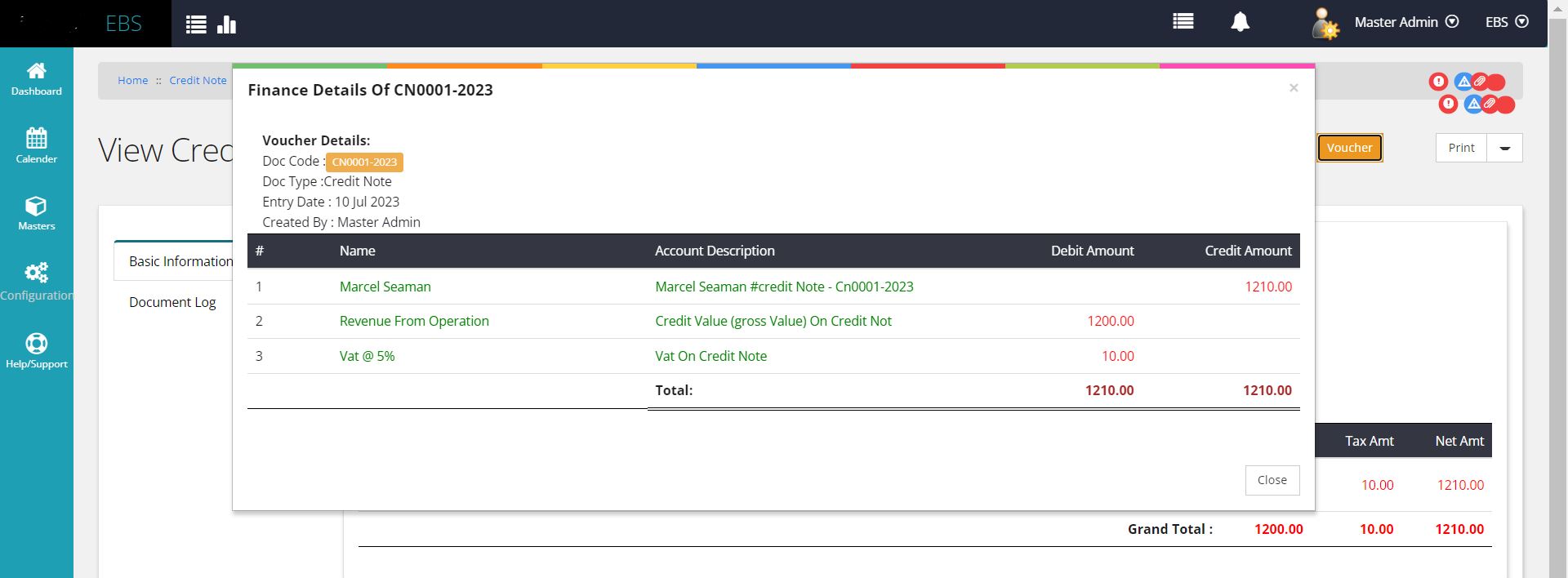
Credit Note Voucher View
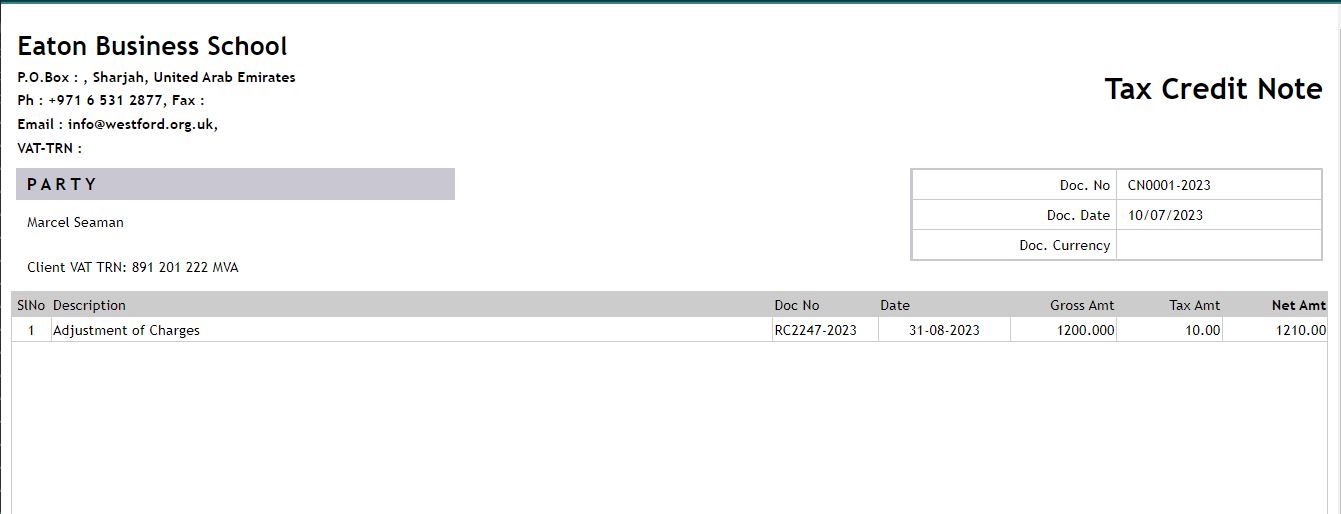
Credit Note Print
Alternatively, selecting the 'Print' option instantly loads a printer-friendly page, optimized for printing purposes. This page layout ensures that the document's content is presented in a format suitable for easy printing without unnecessary elements, making it convenient for physical documentation or archiving purposes.
Cebit Note - New & Edit Document
Users
have the ability to create new Credit notes directly from the Listing
page, facilitated by a prominent Green Button located on the top
right-hand corner. Upon selection, users are directed to the
appropriate document type on the subsequent page.
In the initial stage, users are prompted to input primary information such as customer/supplier details, the document's date, and a concise note. This brief note serves as a succinct reference on the document itself, appearing as a small, descriptive remark.
Understood! Here's a refined version:
The selection of Supplier/Customer and date fields is mandatory. Once users have provided these essential details, they are required to click the 'Proceed' button to advance further in the document creation process.
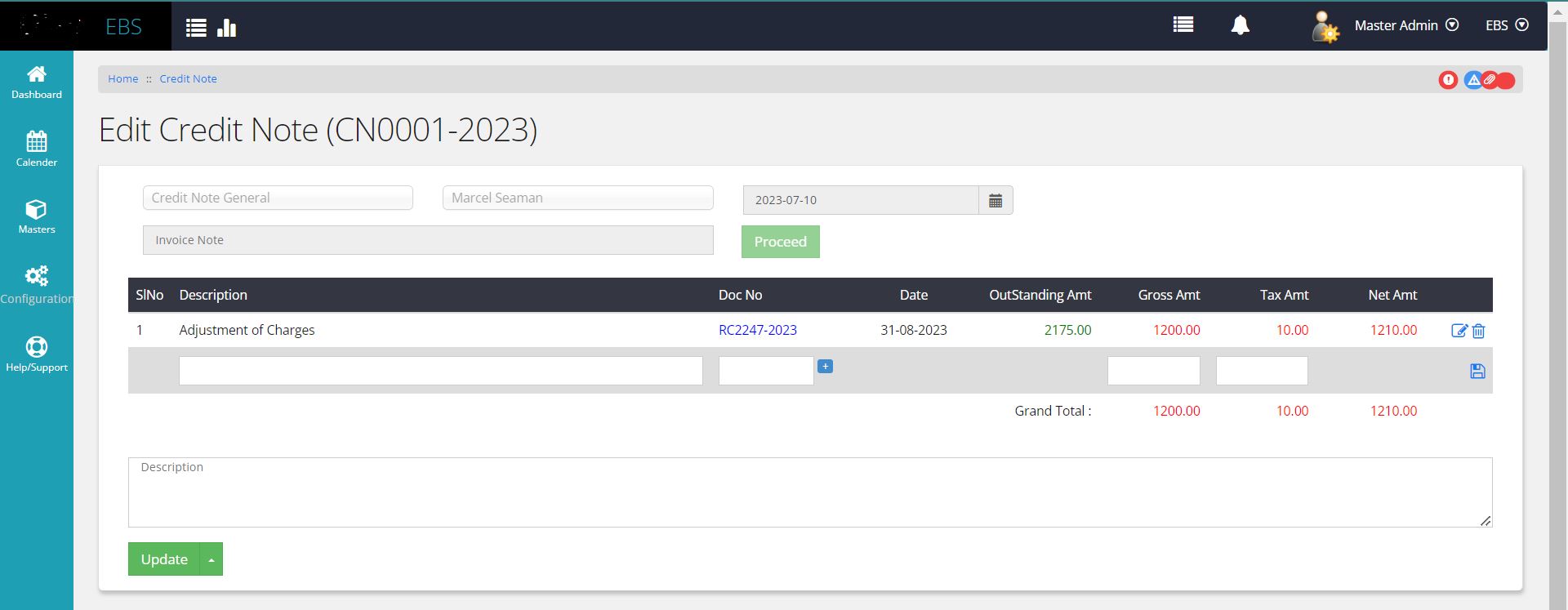
After proceeding, users can input or select various fields including Description, Expense Invoice documents, Credit Note amount, and Tax value. Additionally, users can dynamically select invoice numbers by clicking the [+] button adjacent to the Doc No field. This action opens a list where users can search and choose the relevant invoice. Upon selecting a Reference document, the document amount and date are automatically populated in the respective grid columns.
The Credit Note grid's value should not exceed the selected Reference document's value. After ensuring accuracy, users can click a Save icon provided at the right end of the grid line. If the entry is valid, the line item is saved, allowing users to proceed to the next blank entry line. This process can be repeated for multiple transaction entries.
Beneath the grid, an option is available to include remarks about the document, aiding future references.
Save & Posting of document
Once entries are completed, users can save the document by clicking the 'Save' button located below the column. Users with appropriate rights can also 'Save & Post' the document using the same button selection.
Furthermore, users can post the document from the View Document area if they have the necessary permissions assigned.
Voucher View
To view the Finance Entry Voucher, accountants can access it by clicking the button positioned on the top right side of the document. This provides insight into the entry's financial impact within the organization's financial documents.
Editing the document
Document is avaiable for edit only if its not posted, if document is posted first proceed with unposting the document, which is again a process flow which check for possible intagrity checks.Once the document is open for editing the same procedure flow is applicable